
/consultingPe română

AI consulting for companies in Romania

Most companies have already bought AI tools. Far fewer have changed how the work runs around them, and that is where the gains are. I'm Vlad Tudor, an AI engineer in Bucharest and the founder of Sapio AI. I help companies work out where AI genuinely fits, what to build, and what to leave alone.

A dark office with a process diagram drawn on a glass wall and an open laptop
Based in
Bucharest, Romania
Languages
Romanian · English
Format
Remote or on-site

Two situations come up most.

01

Companies that bought AI tools and aren't seeing the gains.

The licences are paid, a few people use them well, and the rest of the process looks the way it did before. Usually the tool isn't the problem. The work around it was never redesigned, and the data it needs is scattered across spreadsheets, inboxes and people's heads.

02

Founders deciding what to build.

An idea with AI somewhere in the middle, and a decision to make before spending money on it: what the technology can carry today, what it can't, what to build first and what to buy instead. A second opinion from someone who builds these systems for a living.

Factories got electric motors and, for decades, little changed.

Before electric motors, a factory ran on one steam engine turning a central shaft, and every machine connected to it. When electric motors arrived, most factories simply swapped the engine on the shaft. For decades, the gains were small. They came when factories were rebuilt around the task instead of around the power source.

AI is at the same point in most companies. Adding a model to an unchanged process gives you a slightly faster version of the old process. The work that pays is rewiring the process itself: which steps disappear, which get checked by a person, and what data has to exist before any of it works.

Electric motors changed little for decades. The gains came when factories were rebuilt around the task. The same is true for AI.REWIRED · 42:19–44:11 · In English

The full argument, from the REWIRED podcast.

What an engagement can cover.

  • A first conversation

    About the problem, before any technology. Free.

  • An audit of processes, data and tools

    How the work runs today, what data exists, which tools are already paid for.

  • A prioritised roadmap

    What to build, what to buy and what to skip, in order, with the reasoning written down.

  • The build, or a clean hand-off

    Hands-on build through Sapio AI, or a roadmap your own team can take from there.

  • Team enablement

    A workshop for the people who will use the result, so it gets used.

  • Follow-up

    A check on what changed once the work is in place, and what comes next.

Four steps, and you can stop after any of them.

  1. 01

    A conversation

    One call about the problem, not the technology. What you're trying to change, what has been tried, what a good outcome would look like. Free, and it's often enough to tell whether AI belongs in the answer at all.

  2. 02

    A short audit of processes and data

    A look at how the work actually runs today and what data exists to support it. This is where most AI projects are won or lost: messy data and unwritten rules sink more projects than model choice ever does.

  3. 03

    A roadmap

    What to build, in what order, what to buy off the shelf, and what to leave alone. Each item with the reasoning behind it, so the decision stays yours and can be defended internally.

  4. 04

    Build, or hand it over

    If the roadmap says build, Sapio AI, the studio I founded in 2021, can build it to production. If your own team is better placed, the roadmap is written so they can take it from there.

Plainly put.

An engineer who ships production AI

Building AI systems since before ChatGPT made it mainstream. That makes it easier to say honestly what AI can't do.

One person from strategy to code

The person who scopes the problem understands the build. No hand-offs between consultants and developers.

A studio behind the roadmap

When the answer is to build, Sapio AI builds it, so the plan doesn't stop at a slide.

Romanian and English

Conversations, documents and workshops in either language, for teams in Romania and abroad.

Some things are easier to say up front.

No demos for show.

A demo that impresses in a meeting and falls over on real data helps nobody. The work is judged by what runs in production.

Honest when AI is the wrong tool.

Sometimes the answer is a better form, a cleaner spreadsheet or a rule written down. You'll hear that, even when it means there's nothing to build.

No promises the data can't keep.

AI amplifies whatever it's given. If the process is unclear or the data is a mess, that gets said before anyone spends money on a model.

Three things built, without the client names.

Civic tech · 2024–
15,000+ users

ai-aflat.ro: an AI assistant for Romanian law

A free assistant that searches the whole of Romanian legislation, picks the laws relevant to a question and answers with the law cited and linked to the official source. Started as a side project in summer 2024; grown with no marketing budget.

vladtudor.com/ai-aflat
Retail · customer support
Early LLM era

A multilingual customer-support agent on ChatGPT

One of the first ChatGPT-based customer-support agents in production, built for a retail startup at the start of the LLM era. The company went on to raise a $4.7M seed round.

Speech · 2021–22
Romanian STT

A Romanian speech-to-text model

As an ML engineer, trained what was then the best-performing Romanian speech-to-text model for a client.

Recognise one of these?

Describe the problem in a few short questions. The first conversation is free.

Reply within 24 hours · no sales pitch

Vlad Tudor: AI engineer and founder of Sapio AI (2021), creator of ai-aflat.ro. Forbes Romania 30 Under 30 (2025), TEDx speaker, and four years teaching at Politehnica University of Bucharest. Every engagement is led personally.

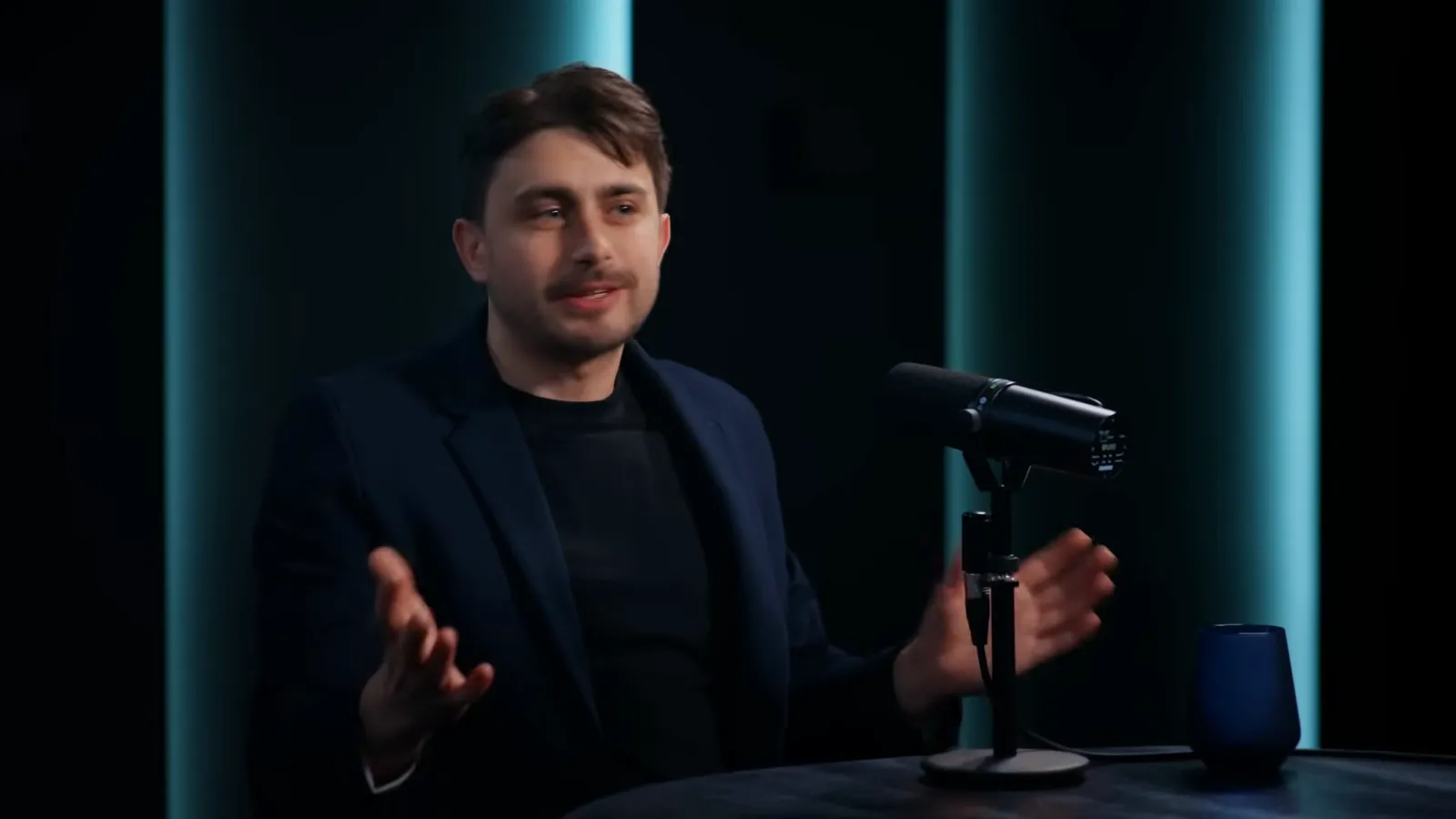
Vlad Tudor explaining an idea at the podcast table
On Gândește Diferit, 2026

Outside client work.

  • AI Leaders RomaniaCo-founderA small collective of AI practitioners who have taken AI to production.
  • AI Collective BucharestCo-organiser & AI engineering leadThe Bucharest chapter of a global non-profit AI community, with 300+ members locally.
  • Let's Talk AICo-organiserA free monthly meetup in Bucharest for people who build with AI and people who want to.
Recent panels and podcasts

Questions that come up.

What does an AI consultant do?

Works out where AI can change how your company works, and where it can't. In practice: a conversation about the problem, a short audit of your processes and data, and a roadmap that says what to build, what to buy and what to leave alone. The value is in the decisions, not the slides.

How much does AI consulting cost?

It depends on scope. The first conversation is free, and you get a written proposal before anything is agreed.

How long does an engagement take?

It depends on scope too. The conversation is a single call; the audit and roadmap are kept short on purpose, and a build runs as long as the roadmap says it should.

Do you also build the AI systems?

Yes, through Sapio AI, the studio I founded in 2021. It builds production AI systems: assistants and agents, retrieval over documents (RAG), computer vision and speech-to-text. If your own team would rather build, the roadmap is written so they can.

Do you work in Romanian and English?

Both. Conversations, workshops and written material in either language.

Remote, or on-site in Bucharest?

Either. I'm based in Bucharest, so meeting on-site there is easy; elsewhere the work runs remotely, with on-site days when they help.

Tell me what you're working on.

A few short questions, two or three minutes. The reply comes from me, within 24 hours on working days.

Reply within 24 hours · no sales pitch

Help with

What would you like help with?

Pick all that apply.